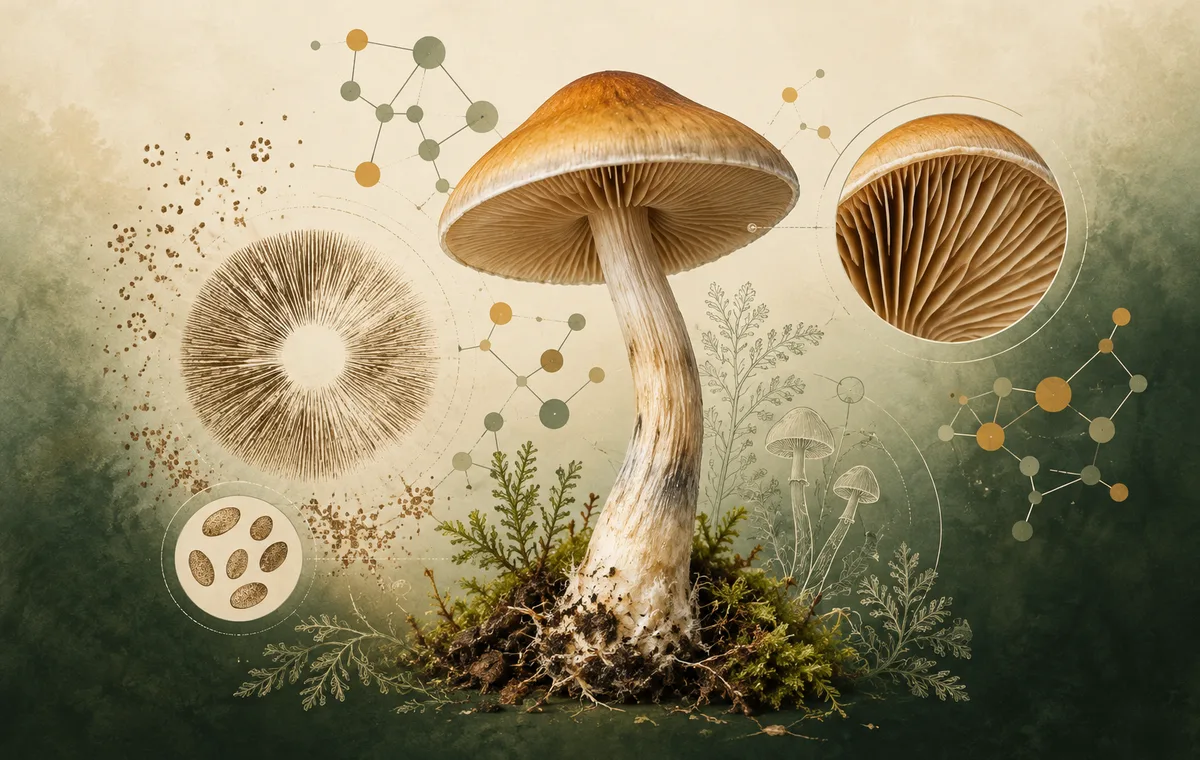
What it is
After ingestion, the body converts psilocybin into psilocin, which interacts with serotonin receptors. Experiences can vary substantially and may be influenced by dose, mindset, surroundings, health, other substances and individual sensitivity.
A long human history
Mushrooms containing psilocybin have a long cultural and ethnomycological history. Modern scientific interest is one chapter in a much broader story that includes traditional knowledge, chemistry and carefully controlled research.
Health information
This website does not provide medical advice and does not present psilocybin as a treatment. People with health concerns, prescribed medication, pregnancy or a personal or family history of serious mental health conditions should seek qualified professional advice and avoid self-treatment.
Why context matters
Online discussions can make very different products, dosages and legal situations sound interchangeable. They are not. Scientific research is conducted under defined conditions and does not turn uncontrolled personal use into medical treatment. Reliable decisions require current law, qualified health information and an honest assessment of individual risk.
Psilocybin and psilocin
Psilocybin and psilocin are related but not identical terms. Psilocybin is converted in the body into psilocin, the compound primarily responsible for psychoactive effects. Strength cannot be determined reliably from appearance alone, and natural material can vary. This is one reason the website avoids potency rankings or promises about an individual experience.
Research is not a consumer claim
Clinical studies may investigate psilocybin under screening, controlled dosing, professional supervision and structured follow-up. Those safeguards are part of the research setting. A headline about a study should not be translated into a personal treatment recommendation, and a retail product should never be presented as equivalent to a regulated clinical intervention.